

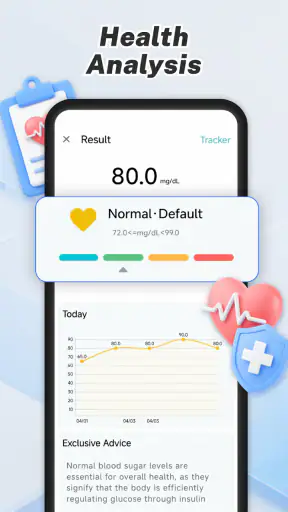
BP Care - Pressure & Sugar is a straightforward health-tracking tool for people who want one place to record blood pressure and blood sugar readings. After spending time with it, my main impression is that it is more useful as a personal logbook than as a medical assistant. That distinction matters: the app can help you notice patterns and prepare clearer information for a conversation with a clinician, but it should not be treated as a device, diagnosis, or replacement for professional advice.
That focused purpose is also its appeal. Instead of trying to become a complete fitness platform, BP Care stays close to two measurements that many people already monitor at home. The app is free, aimed at Everyone, and belongs to the Tools category. Brainy Lab Studio presents it as a practical way to keep records, and the current version is 1.5. I found the concept easy to understand from the first use: enter a reading, keep the history organized, and return to it when you need a broader view than a single number can provide.
How BP Care works in everyday use
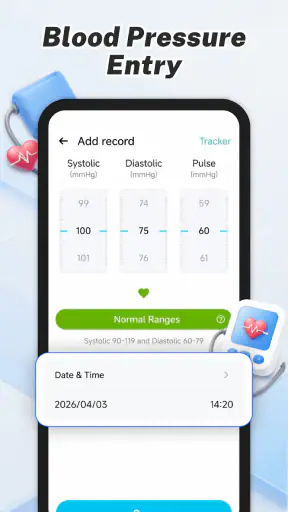
The most sensible way to use this app is alongside a reliable blood pressure monitor or glucose meter. Those devices produce the readings; BP Care gives you a place to preserve them. That sounds simple, but consistent record-keeping is often where home monitoring becomes difficult. Paper notes get misplaced, entries become hard to read, and a series of measurements can lose its context. A digital record is easier to revisit when you are trying to remember what happened over several days.
I would begin by deciding on a routine before entering anything. For example, someone monitoring morning blood pressure could take the measurement under similar conditions, then record it immediately rather than trusting memory. The same approach works for blood sugar: measure according to the schedule recommended by a healthcare professional, enter the result while the meter is still nearby, and avoid filling in a week of readings from memory later. The value of the app depends heavily on that discipline.
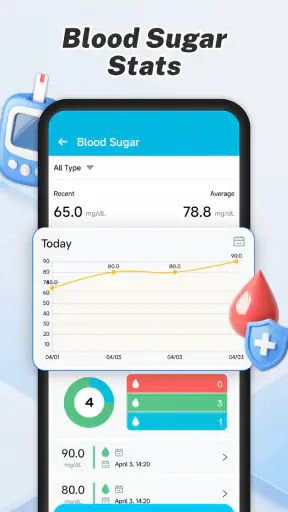
A useful habit is to treat each entry as part of a sequence rather than as an isolated verdict. One unusual result can happen for many ordinary reasons, including timing, stress, recent activity, food, or an imperfect measurement. A record becomes more informative when it shows repeated readings taken in a reasonably consistent way. BP Care is well suited to that kind of accumulation because its purpose is to preserve the history instead of asking you to react to one number.
There is an important practical question here: does the app measure anything by itself? No. It is a recording tool, so you still need a separate blood pressure monitor and, when relevant, a glucose meter. That makes it less useful for someone looking for an all-in-one health device, but it is exactly the right arrangement for a person who already owns dependable equipment and mainly struggles with organization.
A better recording routine than simply typing numbers
The strongest workflow I found is to create a small personal routine around every reading. Take the measurement as instructed for your device, check that the result is plausible, and enter it soon afterward. If your healthcare professional has asked you to distinguish readings by time of day, meal timing, medication schedule, or another circumstance, keep that distinction consistent in your own notes or routine. The app can preserve the numbers, but it cannot decide which context is clinically important for you.
This is one of the less obvious trade-offs. A clean-looking history is not automatically a useful history. If morning results, post-meal results, and random checks are mixed together without any consistent context, the record may be difficult to interpret. I would rather see a smaller, dependable series than a large collection of entries made at unpredictable times. BP Care rewards consistency more than enthusiasm.
Another practical tip is to use the app before an appointment rather than only during one. A few days beforehand, review the entries and identify questions you want to ask. You may notice that your readings are usually taken at different times, or that you have forgotten to record one part of your monitoring routine. That review can make the appointment more productive because you are bringing an organized history instead of trying to reconstruct it in the waiting room.
I also recommend keeping the app in its proper role when a result worries you. Do not wait for a trend inside the app to decide whether a reading needs attention. Follow the instructions given by your clinician and seek appropriate medical help for urgent or concerning symptoms. A tracker can support communication, but it cannot assess your condition or tell you what action is safe.
Where the app is genuinely helpful
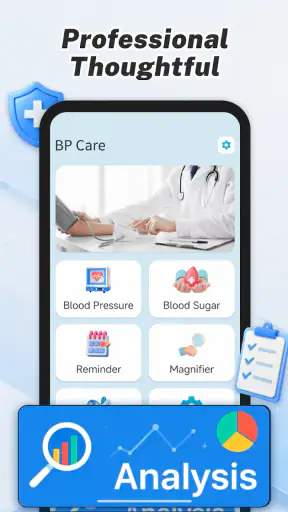
Its clearest strength is focus. BP Care is not asking you to build a large lifestyle profile before you can use it. The central task is recording blood pressure and blood sugar, which makes the app relevant to people who want a narrow tool instead of a crowded wellness dashboard. For an older family member who is comfortable with basic phone actions but does not want a complicated health platform, that limited scope may be an advantage.
The app can also help a caregiver support someone without turning the process into a pile of loose notes. A family member might assist with setting up a regular recording habit, then help review the history before a medical visit. The important boundary is that the caregiver should not use the record to make treatment decisions independently. The app is most valuable as a shared reference point for questions and observations.
Another strength is the psychological benefit of reducing friction. When recording a result takes less effort than searching for paper, people are more likely to keep doing it. That consistency is more meaningful than decorative features. A tracker does not need to be exciting; it needs to be available at the moment when a person has a result to save.
The app’s reach also suggests that this simple use case resonates with many people. It has passed one million installs and holds an average rating of 3.7 from around one thousand seven hundred ratings. I would read those figures as evidence of broad interest rather than a guarantee that every user will love the experience. A rating in that range points to a tool that is useful for some routines but may leave room for a smoother or more complete experience for others.
The limitation that matters most
My biggest reservation is not about the idea of recording readings; it is about how much interpretation a user may expect from a health app. A simple log can feel reassuring, but it does not automatically explain why a result changed, whether a pattern is significant, or what you should do next. Anyone downloading BP Care should be comfortable with that boundary from the start.
This also means the app may feel too basic for users who want connected devices, automatic imports, detailed charts, medication reminders, appointment tools, or direct clinical communication. Those features are common reasons people choose a broader health platform. If your priority is reducing manual entry or combining blood pressure and glucose data with sleep, exercise, diet, and medication schedules, a more comprehensive alternative may fit better.
Manual entry creates another point of friction. It requires attention, and a missed entry cannot be recovered by the app. People who take many readings each day, manage several family members, or use multiple devices may find a dedicated ecosystem with synchronization more efficient. BP Care makes sense when the main problem is keeping a manageable personal record, not when the main problem is handling a large flow of automatically collected data.
I would also avoid expecting the app to settle disagreements between home readings and professional measurements. If your monitor produces results that seem inconsistent, the right response is to check the device and technique and discuss the issue with a qualified professional. The app can store both sets of information, but it cannot validate the equipment or determine which reading should guide treatment.
Who should choose it, and who should skip it
I think BP Care is a good fit for a person who already measures blood pressure or blood sugar and wants a focused digital record. It is especially suitable if you prefer entering readings yourself, want a free tool, and do not need a full lifestyle-management system. The Everyone content rating also makes it approachable for a broad audience, although health decisions should still be guided by an appropriate adult or professional when needed.
It can work well for someone beginning a monitoring habit. The app gives that person a clear reason to open it: preserve the latest result and build a history. I would encourage a new user to start with one measurement routine rather than trying to document every possible health detail. Once the habit is stable, the record becomes more useful and less likely to be abandoned.
It is also a reasonable option for a user who wants to prepare for a consultation. A short, consistent history can help you remember what you have observed and describe your routine more accurately. The best outcome is not an app-generated conclusion; it is a better conversation with the clinician who knows your medical situation.
I would skip it if you expect the phone to measure blood pressure or glucose without separate equipment. I would also look elsewhere if you need automatic synchronization, advanced analysis, medication management, or a robust dashboard covering many health categories. In those cases, a connected monitor’s companion app or a broader health platform may justify its extra complexity.
There is a further audience distinction worth making. People who are anxious about individual readings may not benefit from a tracker unless they have a clear plan for reviewing it. Seeing every number can encourage repeated checking without improving understanding. If that sounds familiar, discuss an appropriate monitoring schedule with a professional before turning the app into a source of constant reassurance-seeking.
My verdict after looking past the simple premise
BP Care succeeds when you judge it as a focused record-keeping tool, not as a complete health-management system. Its best quality is the direct connection between a real-world measurement and a saved personal history. That can make everyday monitoring less scattered and can give a clinician more useful information than a vague recollection.
The trade-off is equally clear: the app depends on manual input and on the user’s judgment. It does not replace the measuring device, interpret a medical condition, or remove the need for professional guidance. Those are not minor details; they define whether the app will feel helpful or disappointing.
For me, the recommendation is specific. If you want a free, uncomplicated place to record blood pressure and blood sugar readings, BP Care is worth trying. Use it with a consistent routine, keep the measurements in context, and treat the history as a communication aid. If you want automation, deeper analysis, or a complete digital health ecosystem, choose a more specialized or connected alternative instead.
Brainy Lab Studio has kept the concept easy to grasp, and the current version 1.5 reflects a tool that is still best approached for its narrow purpose. I would recommend it to a friend who needs a simple log and already owns the necessary measuring equipment. I would not recommend relying on it as a source of diagnosis or urgent guidance. Its real value is organized memory, not medical judgment.


